
Coronavirus ‘second wave’: What lessons can we learn from Asia?Coronavirus ‘second wave’: What lessons can we learn from Asia?

BBC Newsmenu

Share this with Email Share this with Facebook Share this with Twitter Share this with Whatsapp
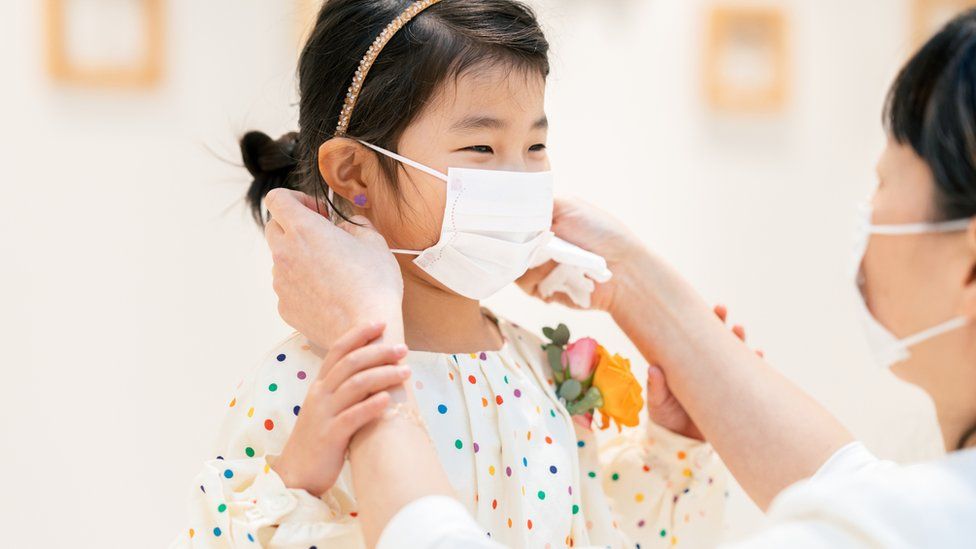

Mother putting protective mask on her young daughter's face.
Image captionCoronavirus might be here to stay, says the World Health Organization

Asia was the first place to experience the coronavirus, impose lockdowns and then emerge from them. It was also the first to experience new groups of infections, with clusters from nightclubs in Seoul, the Russia-China border, and elsewhere. Although it is early for conclusions, can lessons be learned?

1. Wave, spike or cluster – it’s unavoidable

Terms such as second wave, spikes or clusters of cases are bandied around, but what do they mean?

Medically, a second wave refers to the resurgence of infection in a different part of a population after an initial decrease. The WHO says past pandemics have been characterised by “waves of activity spread over months”.

In Asia, we have been seeing isolated clusters and regional spikes in infection numbers. and it is hard to predict how they will develop.

But for Jennifer Rohn, a cell biologist at University College, London, a second wave of coronavirus infections is no longer a matter of “if” – but of “when, and how devastating”.

Even countries with effective strategies to tackle the pandemic through testing, tracing and lockdown management – such as South Korea – have seen spikes and clusters of cases.

So when the World Health Organization says the virus may be here to stay, nations need to understand that they will experience new cases. The challenge is how to predict, track and handle them.

2. Restrictions may have to return

A woman wearing a face mask looks out from a yakitori restaurant in a traditional dining area on March 19, 2020 in Tokyo, Japan.
Image captionThe Japanese island of Hokkaido had to deal with a second wave of infections after lockdown rules were relaxed

“Don’t be too optimistic,” warns Prof Alistair McGuire, chair of health economics at the Department of Health Policy, London School of Economics.

“A successful lockdown does not mean an area will be free of the coronavirus.”

The Hokkaido region, in Japan, was one of the first to impose a severe confinement in late February. By mid-March, the number of new cases had fallen to one or two a day.

Measures worked so well that the state of emergency was lifted and, by April, schools had reopened. But less than a month later, the state of emergency had to be reintroduced, as the island struggled with an abrupt second wave of infections.

That second restriction has now been lifted, but officials know this may happen again – until a vaccine is found.

In China, too, restrictions were eased as cases declined, but by mid May, new clusters were reported, including in the city of Wuhan where the virus first emerged.

In Shulan, in China’s north-eastern Jilin province, dozens of cases prompted the government to reintroduce strict lockdown conditions there.

In South Korea, the latest cluster at a logistics centre outside Seoul led to the closure of more than 200 schools that had only been open for days.

3. Quarantining visitors from abroad
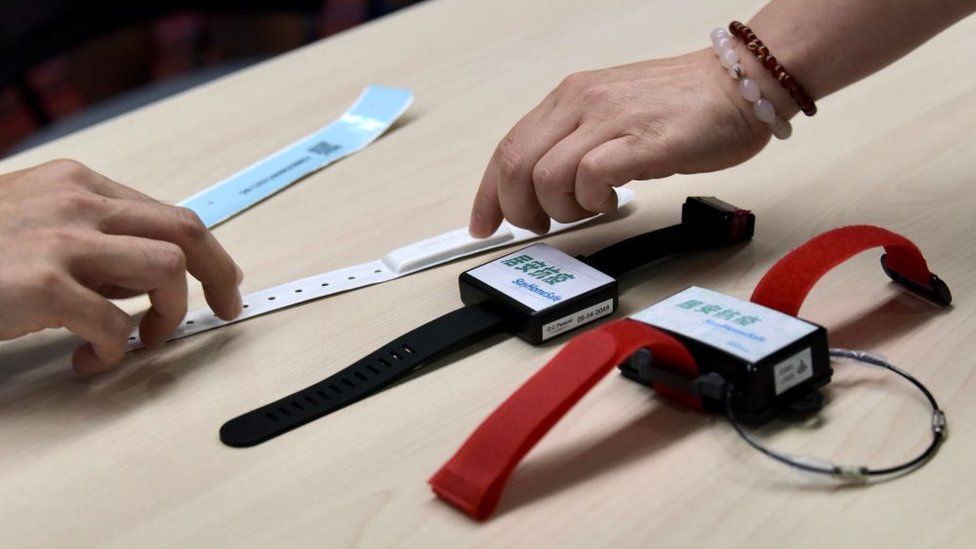
Monitoring wristbands for people under quarantine amid coronavirus outbreak on March, 2020 in Hong Kong.
Image captionHong Kong tracked people under quarantine using electronic wristbands

Spikes in China’s provinces of Jilin and Heilongjiang were attributed to imported cases from neighbouring Russia.

In one instance, eight Chinese citizens returning from Russia tested positive, prompting the quarantining of some 300 others who had travelled in the same time frame.

China had for some time seen the number of imported cases exceed local transmissions and it brought in tough quarantine measures to combat this. For example, all Beijing-bound international flights are being diverted to other cities where they are screened – and quarantined.

Hong Kong established systems, such as electronic bracelets for those arriving from overseas, to track people’s movements and ensure quarantines were adhered to.

They might feel unsophisticated but experts agree such measures are important.

4. Don’t lose ‘test and trace’ momentum
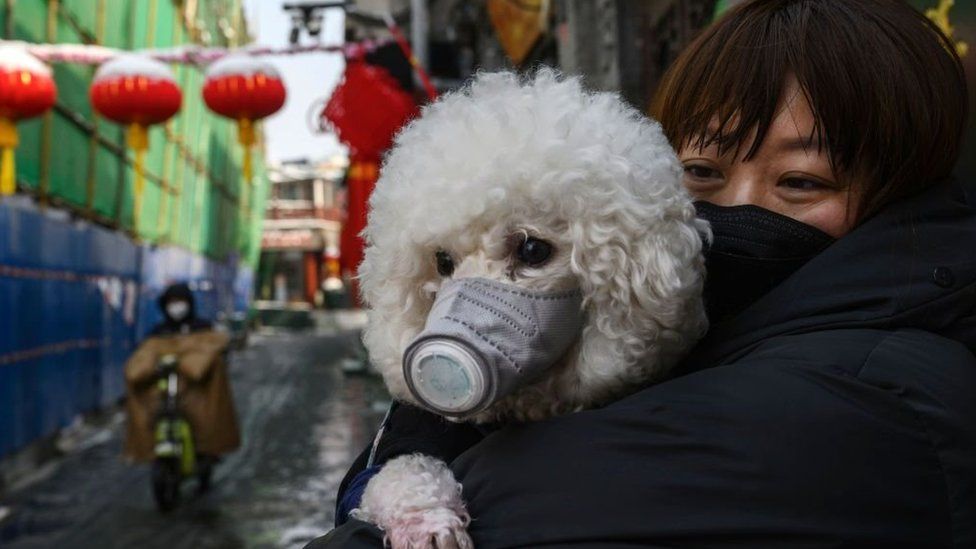
A Chinese woman holds her dog (that is wearing a protective mask as well) as they stand in the street on February 7, 2020 in Beijing, China.
Image captionChina was the first country to experience the pandemic, and to start collecting key data

By early February, South Korea had swiftly developed a system to conduct about 10,000 free tests daily, while relying on apps and GPS technology to track down cases – giving it the framework to quickly squash any new outbreaks.

It allowed them to “put in place local alert systems, so even if the general situation is under control but a new focus emerges, that particular location can lock down,” adds Dr Rohn.

A cluster of new infections – first recorded on 12 May, after weeks with nearly no new domestic cases – was quickly traced and linked to specific locations in Seoul’s popular nightclub district. They have now traced 90,000 people in connection with that.

Almost 300 infections have been linked to the clubs – it was comprehensive tracing that helped officials track its progress through the population.

“We know this is a really, really infectious disease,” Prof McGuire adds. “You only have to look at what happened in South Korea, a country with efficient policies in place… once these were relaxed, they had a rebound. One single person managed to infect more than 100 others in a single weekend.”

The Korean Centres for Disease Control and Prevention (KCDC) has now been able to establish the origin of a number of these cases.

The outbreak in the Chinese city of Shulan close to the Russian border was traced to a laundry worker who infected 13 others initially, but officials still haven’t worked out how she got it.

China’s CDC has said it might have to conduct further epidemiological and biological investigations to see if her virus was a version of what was circulating in Russia.

“As long as the cases are found, timely investigated and tracked, the epidemic can be extinguished quickly, and there should be no outbreak,” Wu Zunyou a Chinese epidemiologist told local media, emphasising how crucial consistent testing and tracing is.

5. And don’t test once – test twice
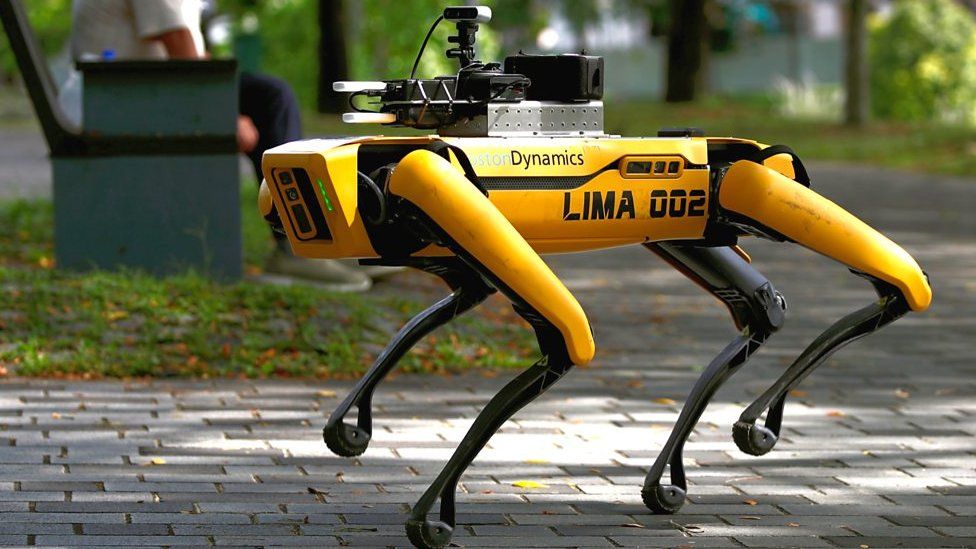
Robot dog in Singapore
Image captionA robot dog patrols one of Singapore’s parks and broadcasts social-distancing messages

“We don’t just need to know who’s got the virus… you also need an antibody test to tell you who had it,” says Prof McGuire.

“This is important because those individuals are very likely to be immune to the virus and they are unlikely to be able to get the virus again, at least in the short term,” adds Ashley St John, assistant professor at Duke-NUS Medical School in Singapore.

Early on in Singapore’s outbreak two unrelated clusters were linked by conducting serological tests on two individuals who it turned out had the virus, but were asymptomatic. It was a crucial breakthrough that helped authorities contain the virus at that point.

“Since the virus can cause asymptomatic or mild disease, it can spread before an individual knows that he or she is sick. I am not aware of testing for immunity being done yet on a nationwide level, but it has been effectively used in Singapore to link clusters and identify suspected cases,” Prof St John adds.

Although it is not nationwide in Singapore, immunity testing is being done in certain vulnerable sectors, for example among pre-school teachers.

Their logic is that if you can find out who might have had the illness, but are not infectious now, you can send them back to work.

6. An adaptable public health service
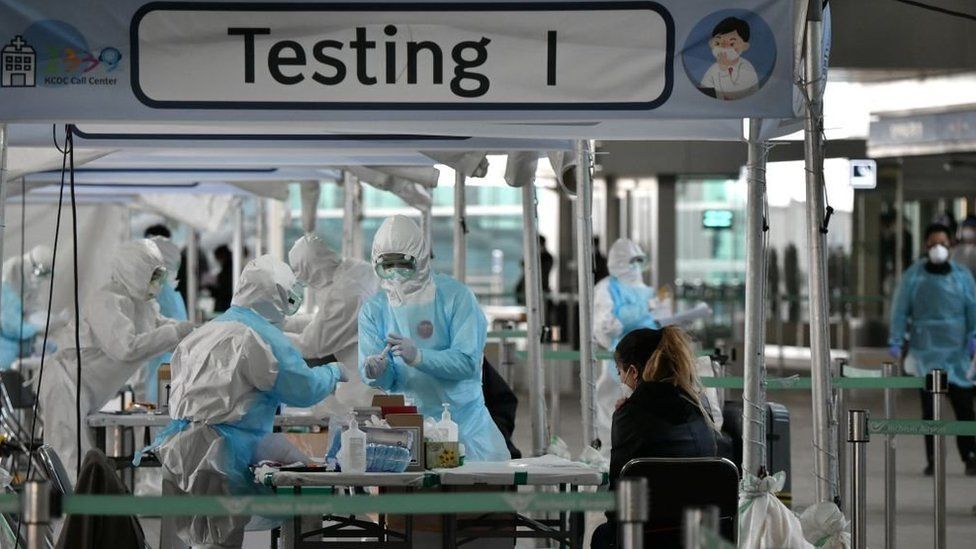
Covid-19 testing in South Korea
Image captionRitght from the start, South Korea relied on its previous experience from dealing with SARS and MERS

It is also important to look at what public health services can learn, says Professor Judit Vall, who has been monitoring how health systems cope, from the School of Economics at Universitat de Barcelona.

“In this pandemic, the health sector has proven it can reinvent itself and adapt quickly,” she says.

China built a 1,000-bed hospital in Wuhan in just eight days, and led the way on how to plan and organise emergency campaign hospitals.

“Hospitals and primary care centres all over the world have learned a great deal from others, but from themselves too,” says Prof Vall, “and they will be in a better position to handle the next wave when it comes.”

Most importantly, this has highlighted the need to keep re-investing in public health so countries can exist in a state of preparedness.

Finally – Prof Vall highlights looking after the mental health of healthcare workers.

“There are studies in Asia [in the wake of Sars and Mers] showing how after an experience like this, health workers can suffer from post-traumatic stress disorders,” she says.

7. There is no ‘one solution’

A group of young women with head-scarves walking on the street in The Netherlands. Some wear face masks, some wear gloves, and some wear no protection at all.
Image captionDr Rohn: “Contagion comes back when we lift the confinement – this is what happens when you have a new virus and no immunity in the population”

But perhaps, the main lesson to take on board is that “there is no single measure or tactic that has made the difference” on its own, says Dr Naoko Ishikawa, WHO’s Covid-19 Incident Manager for the Western Pacific Region.

“It’s not testing alone or physical distancing restrictions alone. Many of the countries and areas in this region have done all of these things, through a comprehensive whole-of-government, whole-of-society approach,” he adds.

“There is no immunisation in the population,” says Dr Rohn, and “until we have an effective and accessible vaccine, we all remain at risk.”


New Laptop Initiative is not a separate loan – Students Loan Trust

FundSource: Myjoyonline.com  
  3 June 2020 6:26pm

Head of Public Relations at the SLTFThe Students Loan Trust Fund has clarified that the new laptop initiative announced last Tuesday is not a separate loan being offered to its borrowers.

The Fund earlier announced that it was introducing an initiative after consultation with the NUGS and other stakeholders which would allow its borrowers to use part of their loans to acquire laptops to aid in online learning.According to the SLTF they would supply the laptops to interested students with a portion of their loan amount, at the request of the student.The laptop would be considered a part of the loan applied for by the student and the same repayment conditions would apply.Currently, beneficiaries of the Fund begin repaying their student loans two years after completion of their studies.

According to the Head of Public Relations at the SLTF George Ferguson Laing, existing borrowers and new loan applicants are eligible to benefit from the scheme.“Recent studies globally, have shown that students from disadvantaged backgrounds are most likely not to participate in online learning because of the prohibitive costs of laptops and data.“As an institution established to promote access to tertiary education for all Ghanaians, this scheme has been introduced to allow students that cannot afford the necessary tools, the opportunity to fully participate in distance learning programmes” he said.He said that students have the opportunity to request for a laptop by filling a simple form on the SLTF’s website, whiles new borrowers can make the request at the time of applying for the loan.As part of measures to contain the Covid-19 pandemic, the government has temporarily shut down educational institutions including universities, leading to the adoption of distance learning programmes by tertiary institutions to limit the disruption.

JHS Students to spend only four hours in school daily: GES

Junior High School students will not spend more than four hours in school per day, the Ghana Education Service (GES) has said.The comment comes after President Akufo-Addo announced the reopening of schools for final year students in the country.As part of measures to return lives to normalcy while mitigating the effects of the Covid-19 pandemic, President Akufo-Addo on Sunday eased more restrictions earlier imposed on some activities in the country.The President in his 10th address to the nation on measures put in place to check the spread of the coronavirus in the country announced the reopening of schools but for only final year students of Junior High School, Senior High School and Tertiary institutions.According to him, beginning 15th June final year students are to resume school starting with University students.“SHS 2 gold track and SHS 3 students are to resume on the 22nd of June, with a maximum of 25 students and final year Junior High School students are to resume on the 29th of June with a maximum of 30 students, while remaining students still remain at home,” President Akufo-Addo said.Providing more clarification on the directive, Deputy Direct-General for Quality and Access for the Ghana Education Service Mr. Kwabena Bempah Tandoh stated that Junior High School students will not be spending more than four hours in school per day.Play video on original page“In our JHS, what we are saying is that they will only be in school for only 4 hours a day; they start at 9 and complete at 1. This is because of the health and well-being checks at hand,” he said.He added that the decision was taken based on stakeholder consutations.“This is an area where we’ve had a lot of consultations. We have had consultations with the Conference of Heads of Assitant Senior High Schools (CHASS), we’ve consulted with Headmasters of Basic Schools, we’ve consulted with our regional and district directors of education and other stakeholders and even CSOs and we have also inflicted on evidence in terms of what is happening elsewhere,” Mr. Tandoh told Samson Anyenini on Newsfile on Saturday.“And we came to the conclusion that final year students should resume and take their exit exam while adhering to all the appropriate measures,” he added.He said every student will be supplied with three washable and reusable face masks.Also, all teaching and non-teaching staff must come to school will also be supplied with the same, three reusable face masks.“Every single school; public and private, will be given at least the minimum of what has been prescribed by the scientists.“That is; handwashing facilities, we are going to provide Veronica buckets, sanitizers, and water to all schools even to those that have problems with water supply,” he added.

Top trending technologies in every aspect of the world’s economy.

Top 8 Technology Trends for 2020
By Nikita Duggal
Last updated on Jun 2, 2020

635979

Technology is now evolving at such a rapid pace that annual predictions of trends can seem out-of-date before they even go live as a published blog post or article. As technology evolves, it enables even faster change and progress, causing an acceleration of the rate of change, until eventually, it will become exponential.
Technology-based careers don’t change at the same speed, but they do evolve, and the savvy IT professional recognizes that his or her role will not stay the same. And an IT worker of the 21st century will constantly be learning (out of necessity if not desire).
What does this mean for you? It means staying current with technology trends. And it means keeping your eyes on the future, to know which skills you’ll need to know and what types of jobs you want to be qualified to do. Here are eight technology trends you should watch for in 2020, and some of the jobs that will be created by these trends.

  1. Artificial Intelligence (AI)
    Artificial Intelligence, or AI, has already received a lot of buzz in recent years, but it continues to be a trend to watch because its effects on how we live, work, and play are only in the early stages. In addition, other branches of AI have developed, including Machine Learning, which we will go into below. AI refers to computer systems built to mimic human intelligence and perform tasks such as recognition of images, speech or patterns, and decision making. AI can do these tasks faster and more accurately than humans.
    Five out of six Americans use AI services in one form or another every day, including navigation apps, streaming services, smartphone personal assistants, ride-sharing apps, home personal assistants, and smart home devices. In addition to consumer use, AI is used to schedule trains, assess business risk, predict maintenance, and improve energy efficiency, among many other money-saving tasks.
    AI is one part of what we refer to broadly as automation, and automation is a hot topic because of potential job loss. Experts say automation will eliminate 73 million more jobs by 2030. However, automation is creating jobs as well as eliminating them, especially in the field of AI: Pundits predict that jobs in AI will number 23 million by 2020. Jobs will be created in development, programming, testing, support, and maintenance, to name a few. Artificial Intelligence architect is one such job. Some say it will soon rival data scientists in need of skilled professionals. To learn more about potential jobs in AI, read about building a career in AI, or why you should earn an AI certification.
    Offer Expires In
    00 :
    HRS 51 :
    MIN 39
    SEC
    Artificial Intelligence Career Guide
    A Guide to Becoming an AI ExpertDOWNLOAD GUIDE
  2. Machine Learning
    Machine Learning is a subset of AI. With Machine Learning, computers are programmed to learn to do something they are not programmed to do: they learn by discovering patterns and insights from data. In general, we have two types of learning, supervised and unsupervised.
    While Machine Learning is a subset of AI, we also have subsets within the domain of Machine Learning, including neural networks, natural language processing (NLP), and deep learning. Each of these subsets offers an opportunity for specializing in a career field that will only grow.
    Machine Learning is rapidly being deployed in all kinds of industries, creating a huge demand for skilled professionals. The Machine Learning market is expected to grow to $8.81 billion by 2022. Machine Learning applications are used for data analytics, data mining, and pattern recognition. On the consumer end, Machine Learning powers web search results, real-time ads, and network intrusion detection, to name only a few of the many tasks it can do.
    In addition to completing countless tasks on our behalf, it is generating jobs. Machine Learning jobs rank among the top emerging jobs on LinkedIn, with almost 2,000 job listings posted. And these jobs pay well: In 2017, the median salary for a machine learning engineer was $106,225. Machine Learning jobs include engineers, developers, researchers, and data scientists.
  3. Robotic Process Automation or RPA
    Like AI and Machine Learning, Robotic Process Automation, or RPA, is another technology that is automating jobs. RPA is the use of software to automate business processes such as interpreting applications, processing transactions, dealing with data, and even replying to emails. RPA automates repetitive tasks that people used to do. These are not just the menial tasks of a low-paid worker: up to 45 percent of the activities we do can be automated, including the work of financial managers, doctors, and CEOs.
    Although Forrester Research estimates RPA automation will threaten the livelihood of 230 million or more knowledge workers or approximately 9 percent of the global workforce, RPA is also creating new jobs while altering existing jobs. McKinsey finds that less than 5 percent of occupations can be totally automated, but about 60 percent can be partially automated.
    For you as an IT professional looking to the future and trying to understand technology trends, RPA offers plenty of career opportunities, including developer, project manager, business analyst, solution architect, and consultant. And these jobs pay well. SimplyHired.com says the average RPA salary is $73,861, but that is the average compiled from salaries for junior-level developers up to senior solution architects, with the top 10 percent earning over $141,000 annually. So, if you’re keen on learning and pursuing a career in RPA, the Introduction to Robotic Process Automation (RPA) course should be the next step you take to kickstart an RPA career.
  4. Edge Computing
    Formerly a technology trend to watch, cloud computing has become mainstream, with major players AWS (Amazon Web Services), Microsoft Azure and Google Cloud dominating the market. The adoption of cloud computing is still growing, as more and more businesses migrate to a cloud solution. But it’s no longer the emerging technology.
    As the quantity of data we’re dealing with continues to increase, we’ve realized the shortcomings of cloud computing in some situations. Edge computing is designed to help solve some of those problems as a way to bypass the latency caused by cloud computing and getting data to a data center for processing. It can exist “on the edge,” if you will, closer to where computing needs to happen. For this reason, edge computing can be used to process time-sensitive data in remote locations with limited or no connectivity to a centralized location. In those situations, edge computing can act like mini datacenters. Edge computing will increase as the use of the Internet of Things (IoT) devices increases. By 2022, the global edge computing market is expected to reach $6.72 billion. As with any growing market, this will create various jobs, primarily for software engineers.
    If you wish to get a thorough understanding of edges means, and how is it different from cloud computing, give it a read here!
    Offer Expires In
    00 :
    HRS 51 :
    MIN 39
    SEC
    Cloud Computing Career Guide
    An In-depth Guide To Becoming A Cloud ArchitectDOWNLOAD GUIDE
  5. Virtual Reality and Augmented Reality
    Virtual Reality (VR) immerses the user in an environment while Augment Reality (AR) enhances their environment. Although VR has primarily been used for gaming thus far, it has also been used for training, as with VirtualShip, a simulation software used to train U.S. Navy, Army, and Coast Guard ship captains. The popular Pokemon Go is an example of AR.
    Both VR and AR have enormous potential in training, entertainment, education, marketing, and even rehabilitation after an injury. Either could be used to train doctors to do surgery, offer museum-goers a deeper experience, enhance theme parks, or even enhance marketing, as with this Pepsi Max bus shelter.
    There are major players in the VR market, like Google, Samsung, and Oculus, but plenty of startups are forming and they will be hiring, and the demand for professionals with VR and AR skills will only increase. Getting started in VR doesn’t require a lot of specialized knowledge. Basic programming skills and a forward-thinking mindset can land a job, although other employers will be looking for optics as a skill-set and hardware engineers as well.
  6. Cybersecurity
    Cybersecurity might not seem like emerging technology, given that it has been around for a while, but it is evolving just as other technologies are. That’s in part because threats are constantly new. The malevolent hackers who are trying to illegally access data are not going to give up any time soon, and they will continue to find ways to get through even the toughest security measures. It’s also in part because new technology is being adapted to enhance security. As long as we have hackers, we will have cyber security as an emerging technology because it will constantly evolve to defend against those hackers.
    As proof of the strong need for cybersecurity professionals, the number of cybersecurity jobs is growing three times faster than other tech jobs. However, we’re falling short when it comes to filling those jobs. As a result, it’s predicted that we will have 3.5 million unfilled cybersecurity jobs by 2021.
    Many cybersecurity jobs pay six-figure incomes, and roles can range from the ethical hacker to security engineer to Chief Security Officer, offering a promising career path for someone who wants to get into and stick with this domain.
    Offer Expires In
    00 :
    HRS 51 :
    MIN 39
    SEC
    Cybersecurity Career Guide
    The Path to Becoming a Cybersecurity ExpertDOWNLOAD GUIDE
  7. Blockchain
    Although most people think of blockchain technology in relation to cryptocurrencies such as Bitcoin, blockchain offers security that is useful in many other ways. In the simplest of terms, blockchain can be described as data you can only add to, not take away from or change. Hence the term “chain” because you’re making a chain of data. Not being able to change the previous blocks is what makes it so secure. In addition, blockchains are consensus-driven, so no one entity can take control of the data. With blockchain, you don’t need a trusted third-party to oversee or validate transactions. You can refer to our Blockchain tutorial for a detailed and thorough understanding of the technology.
    Several industries are involving and implementing blockchain, and as the use of blockchain technology increases, so too does the demand for skilled professionals. In that regard, we are already behind. According to Techcrunch.com, blockchain-related jobs are the second-fastest growing category of jobs, with 14 job openings for every one blockchain developer. A blockchain developer specializes in developing and implementing architecture and solutions using blockchain technology. The average yearly salary of a blockchain developer is $130,000. If you are intrigued by Blockchain and its applications and want to make your career in this fast-growing industry, then this is the right time to learn Blockchain and gear up for an exciting future.
  8. Internet of Things (IoT)
    Many “things” are now being built with WiFi connectivity, meaning they can be connected to the Internet—and to each other. Hence, the Internet of Things, or IoT. The Internet of Things is the future and has already enabled devices, home appliances, cars, and much more to be connected to and exchange data over the Internet. And we’re only in the beginning stages of IoT: the number of IoT devices reached 8.4 billion in 2017 is expected to reach 30 billion devices by 2020.
    As consumers, we’re already using and benefitting from IoT. We can lock our doors remotely if we forget to when we leave for work and preheat our ovens on our way home from work, all while tracking our fitness on our Fitbits and hailing a ride with Lyft. But businesses also have much to gain now and in the near future. The IoT can enable better safety, efficiency, and decision making for businesses as data is collected and analyzed. It can enable predictive maintenance, speed up medical care, improve customer service, and offer benefits we haven’t even imagined yet.
    However, despite this boon in the development and adoption of IoT, experts say not enough IT professionals are getting trained for IoT jobs. An article at ITProToday says we’ll need 200,000 more IT workers that aren’t yet in the pipeline, and that a survey of engineers found 25.7 percent believe inadequate skill levels to be the industry’s biggest obstacle to growth. For someone interested in a career in IoT, that means easy entry into the field if you’re motivated, with a range of options for getting started. Skills needed include IoT security, cloud computing knowledge, data analytics, automation, understanding of embedded systems, device knowledge, to name only a few. After all, it’s the Internet of Things, and those things are many and varied, meaning the skills needed are as well.
    So, What’s Next?
    Although technologies are emerging and evolving all around us, these eight technologies offer promising career potential now and for the foreseeable future. And all eight are suffering from a shortage of skilled workers, meaning the time is right for you to choose one, get trained, and get on board at the early stages of the technology, positioning you for success now and in the future.
    Check out the Simplilearn’s video on “Top Technologies to Learn in 2020”

Shocking: Covid19 updates in Africa in first week of June.

There are now more than over 150,000 confirmed cases of coronavirus across the continent, with a number of African countries imposing a range of prevention and containment measures against the spread of the pandemic.
According to the latest data by the John Hopkins University and Africa Center for Disease Control on COVID-19 in Africa, the breakdown remains fluid as countries confirm cases as and when. As of May 13, every African country had recorded an infection, the last being Lesotho.We shall keep updating this list largely sourced from the John Hopkins University tallies, Africa CDC and from official government data.SUGGESTED READING: Africa’s COVID-19 deaths pass 100,000 markMajor African stats: June 2 at 13:00 GMT:

  • Confirmed cases = 158,030
  • Number of deaths = 4,505
  • Recoveries = 67,491
  • Active cases = 86,034

Countries in alphabetical order

  • Algeria – 9,626
  • Angola – 86
  • Benin – 244
  • Botswana – 40
  • Burkina Faso – 881
  • Burundi – 63
  • Cameroon – 6,585
  • Cape Verde – 466
  • Central African Republic – 1,173
  • Chad – 803
  • Comoros – 132
  • Congo-Brazzaville – 611
  • DR Congo – 3,495
  • Djibouti – 3,779
  • Egypt – 27,536
  • Equatorial Guinea – 1,306
  • Eritrea – 40
  • Eswatini – 294
  • Ethiopia – 1,486
  • Gabon – 2,803
  • (The) Gambia – 25
  • Ghana – 8,297
  • Guinea – 3,886
  • Guinea-Bissau – 1,339
  • Ivory Coast – 3,024
  • Kenya – 2,093
  • Lesotho – 2
  • Liberia – 316
  • Libya – 182
  • Madagascar – 908
  • Malawi – 358
  • Mali – 1,351
  • Mauritania – 668
  • Mauritius – 335
  • Morocco – 7,910
  • Mozambique – 307
  • Namibia – 25
  • Niger – 960
  • Nigeria- 10,819
  • Rwanda – 384
  • Sao Tome and Principe – 484
  • Senegal – 3,932
  • Seychelles – 11
  • Sierra Leone – 909
  • Somalia – 2,089
  • South Africa – 35,812
  • South Sudan – 994
  • Sudan – 5,310
  • Tanzania – 509
  • Togo – 445
  • Tunisia – 1,087
  • Uganda – 507
  • Zambia – 1,089
  • Zimbabwe – 206

SUGGESTED READING: rolling coverage of the coronavirus outbreak in Africa II

Design a site like this with WordPress.com
Get started